Welcome to Shandong Teda Steel Structure Co., Ltd.
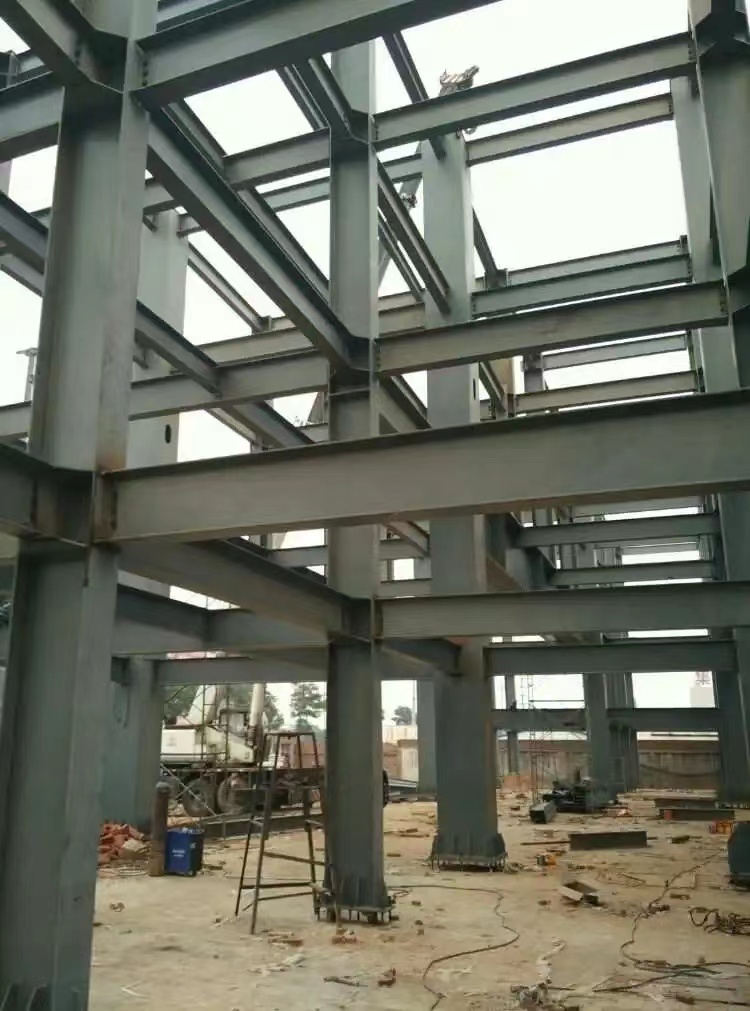
Frame steel structure is a spatial load-bearing system composed of steel beams and steel columns connected by rigid or semi-rigid joints. It relies on the cooperative work of beams and columns to resist vertical loads (such as structural self-weight, live load) and horizontal loads (such as wind load, seismic load). Due to the excellent performance of steel materials and the reasonable structural form, frame steel structure has obvious characteristics and advantages, and is widely used in various types of buildings.
Clear Force Transmission Mechanism: The frame structure forms a closed force-bearing system through the rigid connection between beams and columns. Vertical loads are transmitted from beams to columns, and then to the foundation; horizontal loads are resisted by the bending and shear of beams and columns together. The force transmission path is clear and direct, which is conducive to structural design and stress analysis.
Good Spatial Rigidity and Stability: The rigid joints between beams and columns enable the frame to form an integral spatial structure, which has good lateral stiffness and overall stability. It can effectively control the lateral displacement of the building under horizontal loads, ensuring the normal use of the building and the safety of internal components.
Flexible Architectural Layout: Compared with reinforced concrete frame structures, steel frame structures have smaller cross-sectional dimensions of beams and columns under the same load-bearing conditions. This can save architectural space, increase the usable area of the building, and facilitate flexible division of indoor space. It can adapt to various architectural plane layouts, such as rectangular, L-shaped, T-shaped and other complex shapes.
Excellent Ductility and Seismic Performance: Steel materials have good ductility and toughness, and can undergo large plastic deformation without breaking. The rigid joints of the steel frame can transfer bending moment effectively, so that the structure can absorb and dissipate a lot of seismic energy during earthquakes. This makes the steel frame structure have excellent seismic performance, and is suitable for construction in seismic regions.
Light Structural Weight: Steel has a high strength-to-weight ratio. Compared with reinforced concrete frame structures, the self-weight of steel frame structures is significantly lighter, usually only 1/3 to 1/2 of that of reinforced concrete structures. The light self-weight not only reduces the load on the foundation, but also lowers the difficulty and cost of foundation construction, especially suitable for areas with poor geological conditions.
Short Construction Period: Most components of the steel frame (such as beams, columns, connectors) are prefabricated in factories. The factory prefabrication has high production efficiency, stable quality and can realize standardized production. On the construction site, only assembly and connection work is needed, which greatly reduces the on-site construction time. Compared with reinforced concrete structures that require on-site pouring and curing, the construction period of steel frame structures can be shortened by 30% to 60%.
Strong Adaptability to Construction Environment: Steel frame structures can be constructed in various harsh environments, such as high cold, high temperature, humid and coastal areas. After professional anti-corrosion treatment (such as galvanizing, painting), the steel components can have good corrosion resistance, effectively resisting the erosion of harmful substances in the environment. In addition, the light weight of the structure makes it suitable for construction in areas with limited construction conditions, such as mountainous areas and narrow construction sites.
Environmentally Friendly and Recyclable: Steel is a 100% recyclable green building material. At the end of the service life of the steel frame structure, most of the steel components can be recycled and reused after simple treatment, which reduces the generation of construction waste. Moreover, the factory prefabrication method reduces on-site construction pollution such as dust, noise and sewage, in line with the concept of low-carbon and environmental protection in modern construction.
Convenient Maintenance and Renovation: The surface of steel components is smooth, which is easy to inspect and maintain. If local components are damaged or the use function of the building needs to be changed (such as increasing floors, expanding space), the steel components can be easily cut, welded and replaced. The renovation process will not cause major damage to the original structure, and the construction period is short, which can better meet the changing needs of users.
Due to its excellent comprehensive performance, flexible layout and short construction period, frame steel structure is widely used in various industrial and civil buildings. The main application scenarios are as follows:
Industrial buildings are one of the main application fields of frame steel structure. It is widely used in factory workshops, warehouses, production workshops, power stations and other buildings. For example, machinery manufacturing workshops, automobile assembly workshops, electronic component production workshops and other industrial plants need to place large-scale equipment and have flexible space layout. The steel frame structure can meet these requirements with its small component cross-section and flexible layout; large-scale logistics warehouses and storage yards use steel frame structures to achieve large-span and large-space coverage, facilitating the storage and transportation of goods; power stations, chemical plants and other industrial buildings with harsh working environments also prefer steel frame structures because of their strong adaptability and good corrosion resistance.
In civil buildings, frame steel structure is widely used in high-rise residential buildings, office buildings, hotels, shopping malls and other buildings. For high-rise office buildings and hotels, the steel frame structure has the advantages of light self-weight and good seismic performance, which can reduce the foundation load and improve the safety of the building; the flexible space layout of the steel frame is conducive to the reasonable division of indoor space in shopping malls and office buildings, improving the usable area and commercial value; in recent years, with the development of prefabricated buildings, steel frame structures have also been more and more used in residential buildings, which can realize the industrialization of housing construction and improve the construction quality and efficiency.
Public buildings such as schools, hospitals, gymnasiums, auditoriums and exhibition halls also often adopt frame steel structures. For example, the teaching buildings and laboratory buildings of schools need flexible space to meet the needs of different teaching activities; the ward buildings and operating rooms of hospitals require a clean and stable environment, and the steel frame structure is easy to realize the installation of professional equipment and pipelines; the auditoriums and exhibition halls use the large-span and large-space characteristics of the steel frame structure to meet the needs of gathering people and displaying exhibits.
In transportation and infrastructure buildings, such as airports, railway stations, bus terminals, highway service areas and pedestrian overpasses, frame steel structures are also widely used. For example, the waiting halls and terminal buildings of airports and railway stations need large-span and open spaces, and the steel frame structure can meet the architectural function and aesthetic requirements; the canopies of highway service areas and pedestrian overpasses use steel frame structures due to their light weight, quick construction and good durability.
Temporary buildings such as construction site offices, temporary warehouses, and emergency buildings such as disaster relief shelters and temporary hospitals also often use frame steel structures. The steel frame structure has the advantages of quick assembly and disassembly, reusable, and can be put into use in a short time, which is very suitable for the construction of temporary and emergency buildings.
The construction of frame steel structure is a systematic project involving factory prefabrication and on-site assembly. It is necessary to strictly control each construction link to ensure the construction quality, safety and progress. The specific construction steps are as follows:
Pre-construction preparation is the foundation of the entire construction project, which directly affects the smooth progress of the project. The main contents include:
Design Review and Drawing Disclosure: The construction unit, design unit and supervision unit jointly review the construction drawings, focusing on checking the rationality of the frame structure system, the reliability of node design, the consistency of component dimensions and the feasibility of the construction plan. The design unit conducts drawing disclosure to the construction team, explaining the design intention, key construction points, technical requirements and quality control standards.
Site Investigation and Planning: Conduct a detailed investigation of the construction site to understand the geological conditions, hydrological conditions, surrounding environment (such as nearby buildings, power lines, pipelines) and meteorological conditions. Based on the investigation results, formulate a reasonable construction organization design, plan the layout of the construction site (such as component storage area, assembly area, hoisting area, office area) and do a good job in site leveling, drainage and temporary facilities construction.
Material Preparation and Inspection: Purchase steel materials (such as H-beams, I-beams, angle steels), connectors (such as high-strength bolts, welding materials), anti-corrosion coatings and other materials in accordance with the design requirements and national standards. All materials must be accompanied by product qualification certificates and inspection reports. Before entering the site, sampling inspection shall be carried out on the steel materials (such as mechanical property test, chemical composition analysis) and connectors to ensure that the material quality meets the requirements. At the same time, prepare construction machinery and equipment (such as cranes, welding machines, cutting machines, measuring instruments) and carry out debugging and maintenance to ensure their normal operation.
Construction Scheme Formulation and Personnel Training: Formulate a detailed construction organization design and special construction schemes (such as component prefabrication scheme, on-site hoisting scheme, welding construction scheme, anti-corrosion construction scheme). Clarify the construction process, construction sequence, quality control points, safety protection measures and construction schedule. Conduct technical training and safety education for construction personnel, especially for professional operators (such as welders, hoisting workers, measuring personnel), to ensure that they are familiar with the operating procedures and technical requirements.
The prefabrication quality of frame components (beams, columns, nodes) directly determines the overall quality of the structure. The main steps are:
Steel Material Cutting and Blanking: According to the component processing drawings, use professional cutting equipment (such as plasma cutting machine, flame cutting machine, shearing machine) to cut the steel materials into the required size and shape. During cutting, strictly control the cutting accuracy (such as length, width, thickness, bevel angle) to ensure that the size of the steel material meets the assembly requirements. After cutting, remove the burrs, slag and oxide scales on the surface of the steel material.
Component Forming and Assembly: For beam and column components, carry out forming processing (such as bending, straightening) according to the design requirements. Then, assemble the processed steel parts into complete beam and column components on the dedicated assembly platform. First, set out the lines on the assembly platform according to the design drawings, mark the position of each part. Then, place the steel parts in sequence, adjust their positions and angles, and fix them with positioning fixtures. During assembly, use measuring instruments to check the assembly accuracy (such as component length, height, cross-sectional dimension, node position) to ensure that the deviation meets the requirements.
Node Fabrication and Welding: Nodes are the key parts of the frame structure, which bear the connection function between beams and columns. Common node forms include welded rigid nodes and bolted rigid nodes. For welded rigid nodes, weld the beam and column components at the node position according to the welding process requirements. Select the appropriate welding method (such as gas shielded welding, submerged arc welding) and welding materials. Strictly control the welding temperature, welding speed and welding sequence to avoid welding defects such as cracks, porosity and incomplete fusion. After welding, clean the welding slag and spatter. For bolted rigid nodes, process the bolt holes on the beam and column components according to the design requirements, ensuring the accuracy of the hole position and hole diameter.
Surface Treatment and Anti-Corrosion Coating: Carry out surface treatment on the welded beam and column components to remove rust, oil stains and other impurities. Common surface treatment methods include sandblasting derusting and pickling derusting. The derusting grade shall meet the design requirements. After surface treatment, apply anti-corrosion coating in a timely manner. The coating shall be applied evenly, with the specified thickness and number of layers. After the first coat is dry, apply the second coat. For components used in harsh environments, an additional anti-corrosion layer or galvanizing treatment can be adopted to improve the anti-corrosion performance. After the coating is completely dry, inspect the coating quality, and touch up the missing coating and damaged parts.
Component Inspection and Marking: Conduct a comprehensive inspection of the prefabricated beam and column components, including dimension inspection, welding quality inspection, coating quality inspection and appearance quality inspection. For components that meet the requirements, mark the component number, weight, installation position, hoisting direction and other information to facilitate on-site storage, transportation and assembly.
Transport the prefabricated frame components from the factory to the construction site. During transportation, take protective measures (such as using special brackets, wrapping with protective film, bundling firmly) to prevent deformation, collision damage and coating damage of the components. After arriving at the site, place the components in the designated storage area. The storage area shall be flat, dry and well-drained, and the components shall be padded with sleepers to avoid direct contact with the ground, preventing corrosion and deformation. For large and heavy components, special supports shall be set up to ensure their stability during storage.
On-site assembly and hoisting are the core links of frame steel structure construction, which require strict control of construction accuracy and safety. The main steps are:
Measurement and Setting Out: According to the construction drawings and control points, use professional measuring instruments (such as total station, theodolite, level gauge) to carry out measurement and setting out on the construction site. Determine the installation position, elevation and axis of the frame columns and foundations, and set up positioning markers and control lines to ensure the accuracy of component installation.
Foundation and Support Installation: Install the frame support components (such as support seats, bearing plates, anchor bolts) on the foundation according to the setting out position. Adjust the elevation and levelness of the support components, and fix them firmly. Check the position and accuracy of the support components to ensure they meet the design requirements. For prefabricated concrete foundations, check the quality and accuracy of the foundation before installation.
Column Hoisting and Fixing: According to the weight and height of the column components, select the appropriate hoisting equipment (such as crawler cranes, tower cranes) and hoisting methods. Before hoisting, install lifting lugs on the columns according to the hoisting scheme. During hoisting, command the operation uniformly, control the lifting speed and stability, and avoid collision between the columns and other objects. When the column is hoisted to the installation position, align it with the anchor bolts on the foundation, adjust the verticality and elevation of the column by using shims and jacks, and then temporarily fix it with nuts. Use a plumb bob or theodolite to check the verticality of the column, and ensure that the deviation meets the requirements. After the adjustment is completed, tighten the anchor bolts and fix the column firmly.
Beam Hoisting and Connection: After the columns are fixed, hoist the beam components. The beam hoisting shall be carried out in sequence according to the construction plan, and the symmetry and balance of the structure shall be considered. Before hoisting, install lifting lugs on the beams. During hoisting, align the beam with the column node, and adjust the position and levelness of the beam. Then, connect the beam and column according to the design requirements (high-strength bolt connection or welding connection). For high-strength bolt connection, ensure that the bolt holes are aligned, and tighten the bolts in the specified sequence and torque (initial tightening, re-tightening and final tightening). For welding connection, clean the welding area first, then carry out welding, and check the welding quality after welding.
Frame Correction and Inspection: After the installation of a single frame unit (a group of beams and columns), use measuring instruments to check the overall accuracy of the frame, including column verticality, beam levelness, frame span, height and axis deviation. If there is any deviation, adjust it in time. After the installation of all frame units, check the overall stability and rigidity of the frame to ensure that the structure is stable and the connections are firm.
Installation of Bracing and Auxiliary Components: Install the bracing system (such as horizontal bracing, vertical bracing, diagonal bracing) according to the design requirements. The bracing system can improve the lateral stiffness and overall stability of the frame structure, and resist horizontal loads such as wind load and seismic load. At the same time, install auxiliary components such as floor beams, purlins, and railings to prepare for the subsequent installation of floor slabs, roof panels and wall panels.
After the main frame structure is installed and accepted, install the enclosure components and internal components. The main steps are:
Floor Slab Installation: Install the floor slabs (such as steel deck slabs, precast concrete slabs) on the floor beams. For steel deck slabs, lay them in sequence according to the design requirements, and fix them with self-tapping screws or welding. For precast concrete slabs, hoist them in place and connect them firmly with the floor beams. After the floor slab installation is completed, carry out the pouring of the concrete surface layer (if required) to ensure the flatness and bearing capacity of the floor.
Roof Panel Installation: Transport the roof panels (such as color steel sandwich panels, aluminum-magnesium-manganese alloy panels) to the roof. Install the roof panels from one end to the other according to the design sequence. The connection between roof panels can adopt lap joint, snap joint or bolted connection. During installation, ensure that the lap joint is tight, and seal the lap joint with sealant to prevent water leakage. Install roof accessories such as roof ridges, gutters, downspouts and wind deflectors at the same time.
Wall Panel Installation: Install the wall panels from bottom to top. The wall panels are connected with the purlins or wall frames by self-tapping screws or rivets. During installation, ensure that the wall panels are flat, vertical and the joints are tight. Install door and window frames at the same time, and seal the gaps between the door and window frames and the wall panels with sealant to improve the thermal insulation, sound insulation and waterproof performance of the building.
Installation of Internal Components: Install internal components such as stairs, handrails, pipelines and electrical equipment according to the design requirements. Ensure that the installation position of the components is accurate, and the connection is firm and reliable. The installation of pipelines and electrical equipment shall comply with relevant national specifications to ensure safe use.
After the completion of the entire frame steel structure construction, carry out a comprehensive final inspection and acceptance to ensure that the project quality meets the design requirements and national relevant standards. The main contents include:
Appearance Quality Inspection: Check the appearance of frame components, welds, coatings, floor slabs, roof panels and wall panels. Check for defects such as deformation, cracks, welding spatter, coating peeling, roof water leakage and wall panel damage.
Dimension and Position Accuracy Inspection: Use measuring instruments to recheck the key dimensions and positions of the structure, including frame span, height, axis deviation, column verticality, beam levelness and support elevation. Ensure that all deviations are within the allowable range of the specification.
Connection Quality Inspection: Conduct a comprehensive inspection of the connection parts, including high-strength bolt torque inspection, anti-loosening measure inspection, welding seam non-destructive testing (such as ultrasonic testing, X-ray testing) and node connection firmness inspection. Ensure that all connections are reliable and meet the design requirements.
Structural Stability and Safety Inspection: Check the bracing system, floor slabs, purlins and other components to ensure that they are installed in place and have sufficient stability. Conduct load test on the structure if necessary to verify its bearing capacity. Check the fire protection and anti-corrosion measures to ensure they meet the relevant specifications.
Construction Data Sorting and Acceptance: Sort out all construction data, including design documents, material inspection reports, component prefabrication records, on-site construction records, welding inspection reports, measurement records and safety inspection records. Submit the data to the supervision unit and owner for review. After passing the data review and on-site inspection, the project can be formally accepted and put into use.
Frame steel structure, with its clear force transmission, flexible layout, excellent seismic performance, short construction period and environmental protection advantages, has become an important structural form in modern construction. It is widely used in industrial, civil, public and transportation buildings, and plays an important role in promoting the modernization and industrialization of the construction industry. The construction of frame steel structure involves multiple links such as pre-construction preparation, factory prefabrication, on-site hoisting and assembly. Only by strictly implementing the construction procedures, strengthening quality control and adhering to safety production can the construction quality and structural safety be ensured, and the excellent performance of the frame steel structure be fully exerted.

Copyright © 2023 Shandong Taida Steel Structure All Rights Reserved. XML Maps
Technical Support:Shandong Taida Steel Structure Co., Ltd
Scan to ChatHotline

![[lsit:title]](/static/upload/image/20230418/1681806890691293.jpg)
![[lsit:title]](/static/upload/image/20230418/1681799010587461.jpg)
![[lsit:title]](/static/upload/image/20230419/1681884718686743.jpg)